

Overview
In pursuing the aim of a free and independent media, the Mission highlights the obligation of the country to implement the 2018 OSCE Ministerial Decision on Safety of Journalists.
The Mission works to advance media freedom in Bosnia and Herzegovina by promoting the harmonization of laws and practices with international human rights standards, particularly in the area of freedom of expression and freedom of the media. A core part of its work involves monitoring and responding to threats and attacks against journalists, recognizing their critical role in a democratic society.
To strengthen journalist safety, the Mission facilitated the establishment of a nationwide network of contact points for the safety of journalists, which includes all prosecutorial and police offices in the country. This network serves as a mechanism for co-ordinated institutional response to threats, aiming to improve prevention, protection and prosecution in cases involving media professionals.
The Mission also monitors the intersection of human rights and new technologies, particularly where digital developments may impact media freedoms, freedom of expression or access to information.
Through these efforts, the Mission, also in close co-operation with the OSCE Representative on Freedom of the Media and other local and international partners, contributes to creating a safer and more enabling environment for independent journalism in Bosnia and Herzegovina.
Featured
Activities, news and other highlights
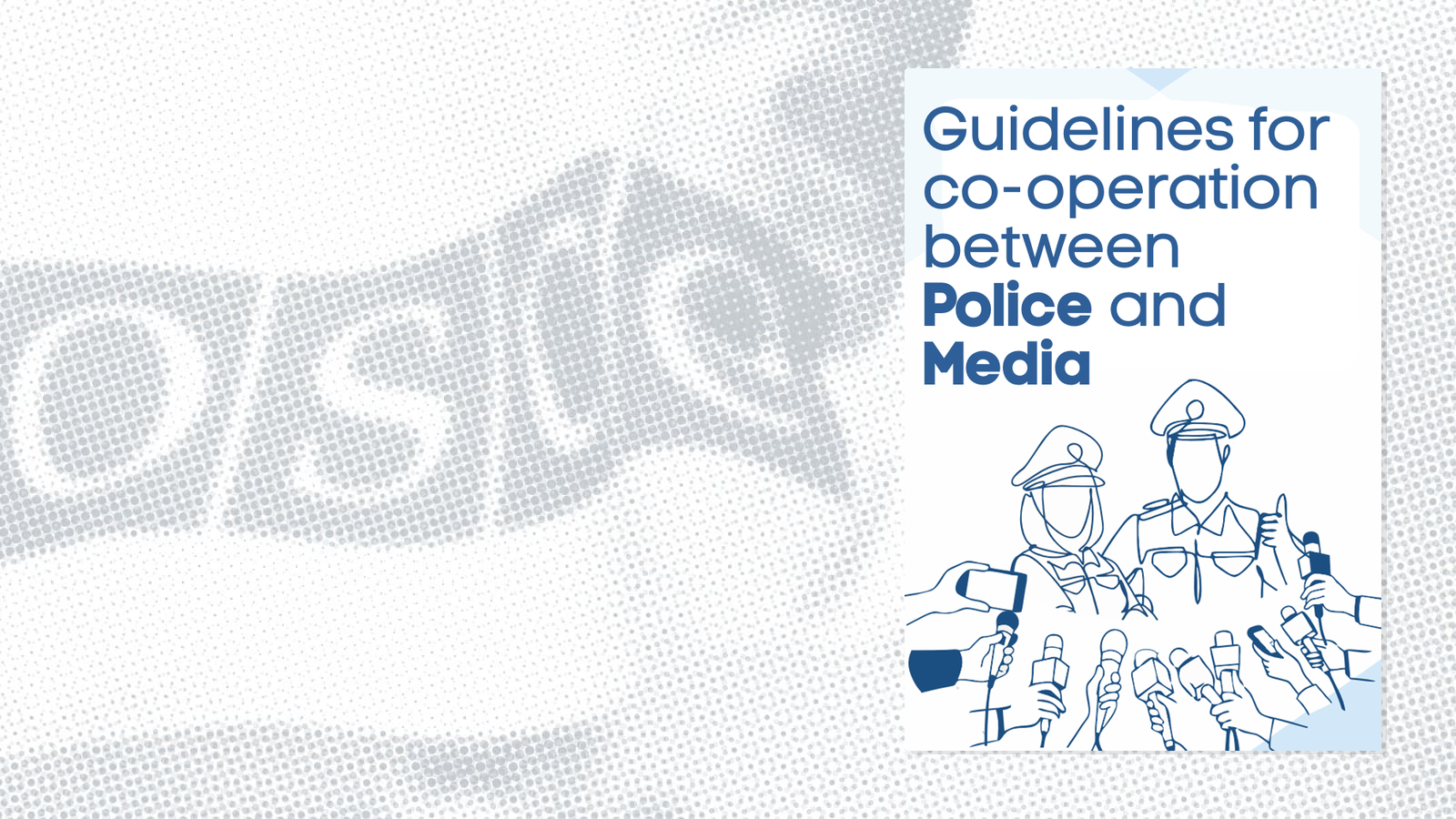
Guide / manual / handbook
The OSCE Mission to Bosnia and Herzegovina Guidelines for Co-operation Between Police and Media
During the performance of their professional tasks and in the interest of the public, the police and the media realize cooperation and create responsible, professional and partnership relations and practices based on understanding, trust and proactive approach.
Report
Assessment of Media Sector Needs in Bosnia and Herzegovina
The media sector in Bosnia and Herzegovina (BiH) is facing numerous obstacles. The sector is
characterized by a large number of media outlets, continuous marketing income decrease and political
pressure on editorial policy and media freedoms. There are three public broadcasting services, around
100 TV stations, 150 radio stations, 8 news agencies and 8 daily newspapers as well as numerous
online media that compete for income in a modest media market. In addition to this, the COVID-19
pandemic has had a strong adverse impact on the media sector in Bosnia and Herzegovina. The
media suffered a sharp advertising income decline, and some were forced to fire journalists and other
media professionals. In spite of a better epidemiological situation and income generated in 2021, the
media are still facing financial consequences and journalists are still inadequately paid.

News Item
Fifth Media Law School Empowers Future Lawyers to Protect Press Freedom in BiH
SARAJEVO, 21 September 2025 – The Law School of the University of Sarajevo, the OSCE Mission to Bosnia and Herzegovina, and the European Union in BiH successfully held the Fifth Media Law School on Safety and Protection of Journalists: From Online Threats to Physical Attacks from 17 to 21 September in Sarajevo.
Learning, training and research
Strengthening competenceThe OSCE Mission to Bosnia and Herzegovina offers courses and learning resources to support practitioners and other interested audiences in the OSCE participating States.
